

EN
Get In Touch

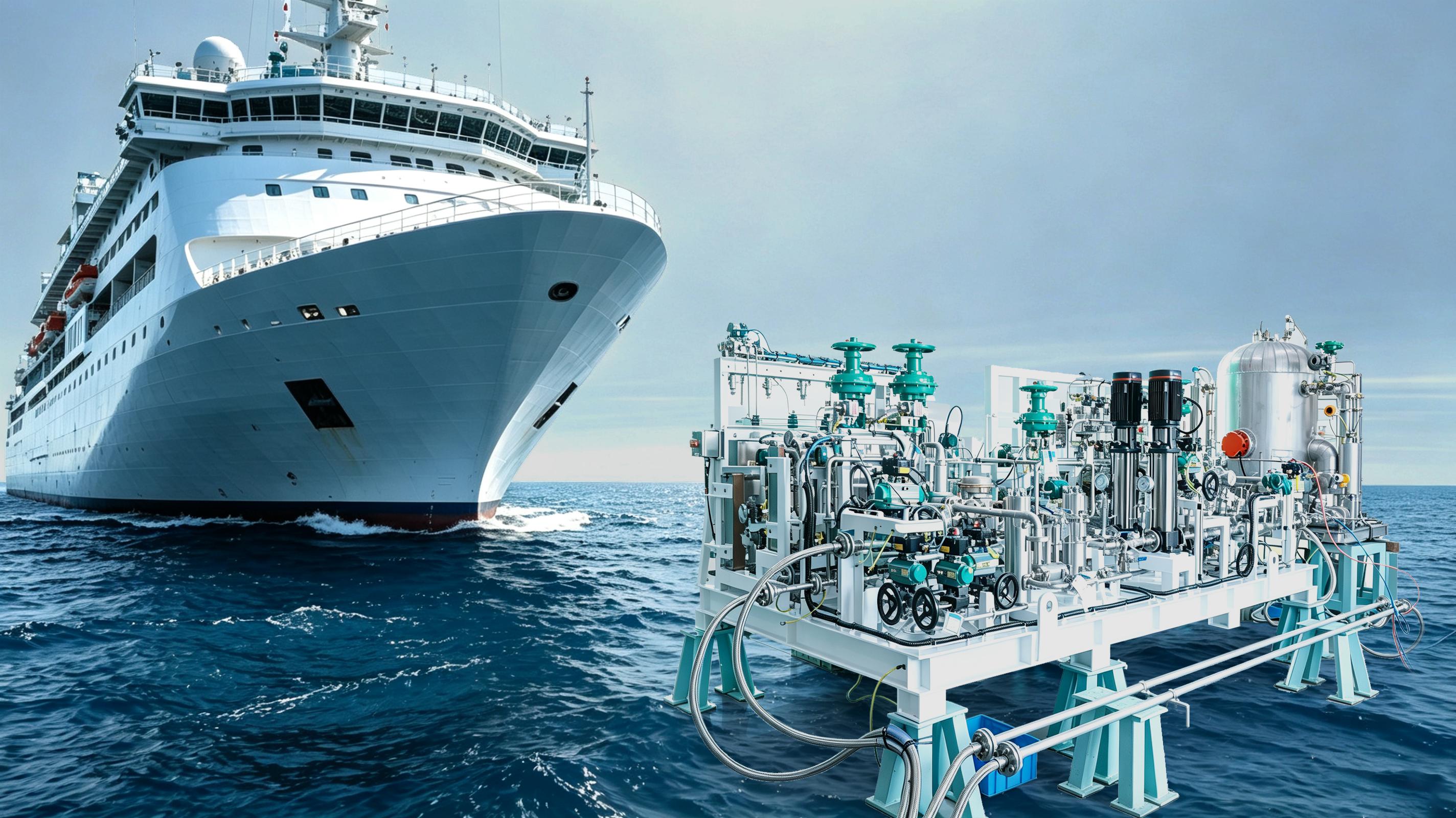
A methanol fuel supply system is an integrated system that stores, conditions, transfers, and delivers methanol to marine engines. The system includes fuel tanks, fuel pumps, fuel lines, filtration equipment, pressure control devices, fuel injectors, safety equipment, and automation systems.
Modern methanol-powered vessels often use dual fuel engines that can operate with both methanol and conventional marine diesel. In these systems, methanol provides the main energy source, while a small amount of pilot fuel supports stable ignition and combustion.
As the shipping industry moves toward lower-emission marine fuels, methanol has become one of the most practical alternatives because it can reduce sulfur emissions, lower nitrogen oxide emissions, and support the transition to green methanol produced from renewable sources.
A methanol fuel supply system is a specialized onboard installation designed for the storage and handling of methanol, fuel conditioning, pressure regulation, and fuel delivery to marine engines.
Unlike traditional marine diesel systems, methanol systems must address several unique characteristics:
The system ensures that methanol is safely transferred from storage tanks to the engine while maintaining the correct temperature, pressure, and flow conditions.
The maritime industry is under increasing pressure to reduce emissions while maintaining reliable vessel operations.
Several factors are driving the adoption of methanol as one of the preferred marine fuels.
Methanol combustion can significantly reduce:
Compared with cryogenic fuels, methanol can be stored in liquid form under normal pressure conditions.
This reduces the complexity of some storage and handling operations.
Green methanol is produced from renewable electricity, biomass, captured carbon dioxide, or other sustainable feedstocks.
Many shipowners are exploring green methanol as part of their decarbonization strategies because it can reduce the carbon footprint throughout the fuel lifecycle.
Many ports already have liquid fuel infrastructure that can be adapted for methanol bunkering, making it easier to introduce methanol into existing shipping operations.
Many operators ask how the fuel system works on a methanol-powered vessel.
The process can be divided into six stages.
Methanol is stored in dedicated fuel tanks designed to prevent leakage and contamination.
Because methanol can absorb water and interact with certain materials, tank construction requires careful material selection.
Storage systems typically include:
Transfer pumps move methanol from storage tanks to intermediate service tanks or fuel conditioning units.
The fuel delivery process must maintain a controlled flow rate while preventing excessive pressure fluctuations.
Before entering the engine, methanol passes through equipment that regulates:
Although methanol remains liquid at normal operating conditions, fuel conditioning is still necessary because ambient temperatures can affect viscosity, density, and fuel behavior.
High-pressure pumps increase fuel pressure to meet engine requirements.
Different engine manufacturers may require different operating pressures.
Fuel injectors atomize the methanol and deliver methanol into the combustion chamber.
Injection timing and spray patterns directly influence combustion efficiency.
Inside the engine, methanol combustion releases energy that powers the vessel.
In many dual-fuel configurations, a small amount of pilot fuel is injected first to initiate combustion.
Understanding marine fuel systems components helps shipowners select the right system configuration.
Fuel tanks are responsible for safe methanol storage.
Common design considerations include:
Transfer pumps move fuel between tanks and supply modules.
Typical functions include:
Service tanks provide a temporary fuel reserve before the methanol enters the fuel supply system.
These tanks help stabilize fuel flow during vessel operations.
Fuel lines transport methanol throughout the entire system.
Because methanol can affect some metals, elastomers, and seals, the selection of piping materials is particularly important.
Many systems use:
Filtration systems remove contaminants that may damage downstream equipment.
Typical filtration equipment includes:
Pressure control devices maintain stable operating conditions.
These units typically include:
Fuel injectors are responsible for delivering precisely metered fuel into marine engines.
Modern electronic fuel injectors can improve:
Advanced system solutions usually integrate:
Today, many vessels use dual fuel engines rather than dedicated methanol engines.
Dual fuel engines can operate using two different fuels.
Common combinations include:
When operating in methanol mode, the engine uses methanol as the primary fuel while a small quantity of pilot fuel initiates ignition.
Dual-fuel operation offers several advantages:
Fuel switching requires careful control because changes in:
can affect engine performance.
Integrated control systems automatically manage these transitions.
Material compatibility is one of the most important engineering considerations.
Common materials include:
| Component | Common Materials |
|---|---|
| Fuel tanks | Stainless steel |
| Fuel line | Stainless steel |
| Valves | Stainless steel |
| Pumps | Methanol-compatible alloys |
| Seals | Specialized elastomers |
Methanol can attack some materials that perform well in conventional marine diesel applications.
System designers must evaluate:
Methanol contains less energy per unit volume than conventional marine fuels.
As a result, vessels may require larger storage tanks to achieve the same sailing range.
Ambient temperatures can influence fuel properties and system performance.
In extremely cold environments, additional temperature management may be necessary.
Methanol is classified as a low-flash-point fuel.
Safety measures typically include:
Although methanol bunkering networks are expanding, fuel availability still varies between ports.
Shipowners should evaluate local fuel infrastructure before selecting methanol-powered vessels.
Several trends are shaping the next generation of methanol-powered ships.
More shipping companies are investing in green methanol to reduce lifecycle emissions.
Modern system solutions increasingly include:
Future fuel delivery technologies will focus on:
Yes. Methanol is becoming one of the fastest-growing alternative marine fuels because it can reduce sulfur emissions and support lower-carbon shipping strategies.
Methanol systems require specialized storage and handling equipment, compatible materials, enhanced safety measures, and different fuel conditioning methods.
Most conventional diesel engines cannot directly use methanol. In many cases, engines require modifications or replacement with dual fuel engines.
Methanol has different ignition characteristics than diesel fuel. Pilot fuel provides the ignition source that starts combustion inside the engine.
Stainless steel is one of the most common materials because of its compatibility with methanol and its resistance to corrosion.
Green methanol is methanol produced from renewable energy sources, biomass, or captured carbon dioxide. It offers a lower-carbon alternative to conventionally produced methanol.
The fuel system works by transferring methanol from fuel tanks through pumps, conditioning equipment, pressure control units, and fuel injectors before it enters the engine for combustion.
Methanol fuel supply systems are changing the way ships use alternative fuels. From storage and handling to fuel delivery and combustion, every component must be designed for safety, reliability, and compatibility.
As more vessels adopt methanol-powered propulsion, technologies such as dual fuel engines, advanced fuel injectors, intelligent monitoring, and green methanol production will continue to shape the future of marine transportation.