

EN
Get In Touch

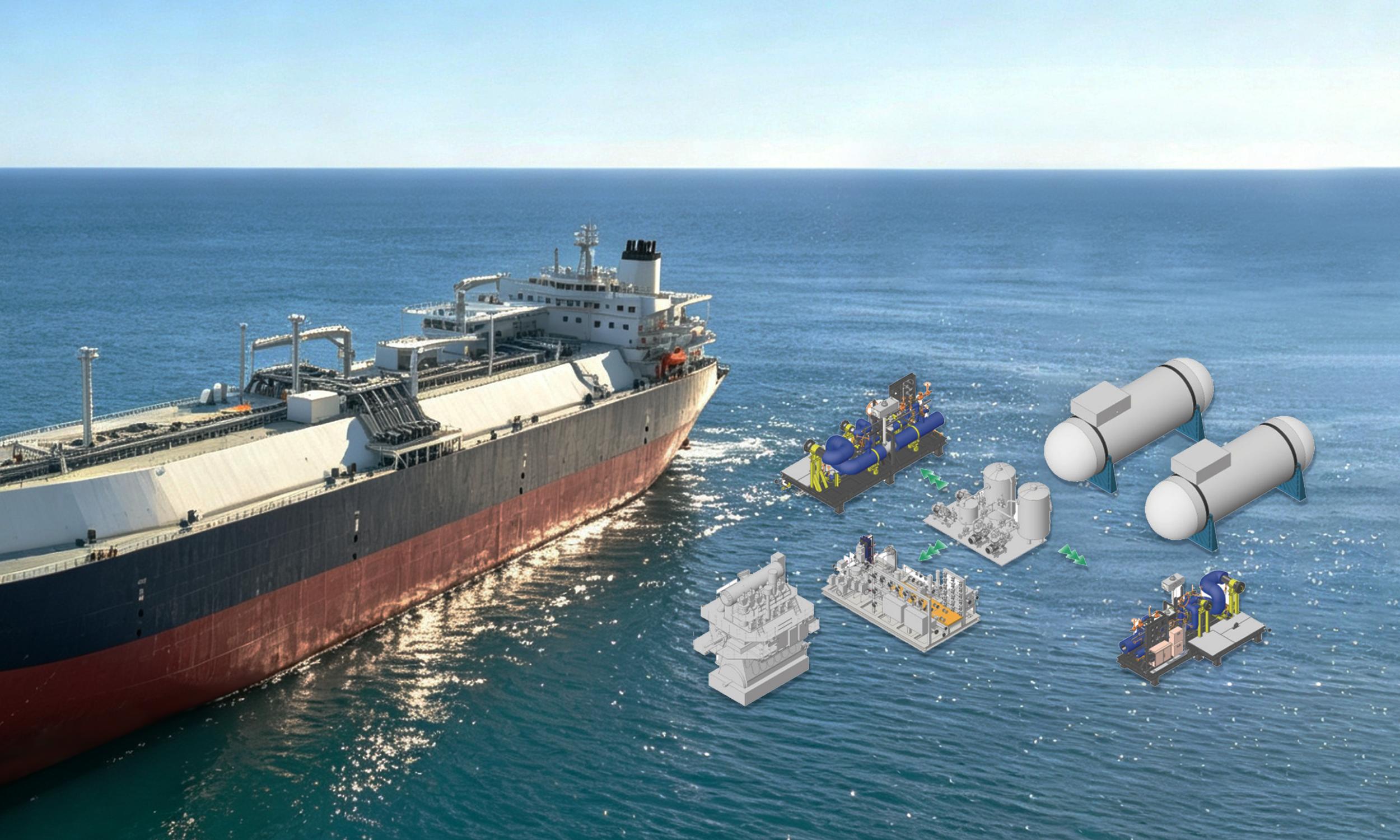
An ammonia fuel supply system is a specialized marine fuel system designed to store, transfer, condition, monitor, and deliver ammonia from onboard storage tanks to marine engines or fuel cell systems.
Compared with conventional marine diesel systems, ammonia fuel systems require additional safety measures because ammonia is toxic and can become hazardous when released into the atmosphere. Modern systems integrate leak detection, ventilation, double-wall piping, emergency shutdown functions, ammonia release mitigation system arms, gas monitoring, and fuel conditioning equipment to reduce operational risks.
As the maritime industry moves toward low-carbon and zero-carbon shipping, ammonia as fuel is becoming one of the most discussed alternative fuel solutions for new vessels and dual fuel ship designs.
An ammonia fuel supply system is an onboard system that stores liquid ammonia and safely delivers it to engines, burners, or fuel cell equipment at the required pressure, temperature, and flow rate.
The system normally includes:
The main purpose is to ensure that ammonia can be stored and transported safely while maintaining stable fuel delivery during vessel operation.
The shipping industry is under increasing pressure to reduce greenhouse gas emissions.
Traditional marine fuel produces significant amounts of:
Ammonia as a marine fuel offers several advantages:
| Benefit | Description |
|---|---|
| Carbon-free combustion | Ammonia contains no carbon atoms |
| Lower greenhouse gas emissions | Potential for near-zero CO₂ emissions |
| Existing global infrastructure | Ammonia is already transported worldwide |
| Energy storage capability | Easier to store than hydrogen |
| Long-distance shipping suitability | Better volumetric energy density than compressed hydrogen |
When produced from renewable energy, green ammonia can become an environmentally friendly fuel option for oceangoing vessels.
However, ammonia also presents several challenges:
These challenges make ammonia fuel systems much more complex than traditional fuel systems.
The basic process follows these steps:
The entire process must be carefully controlled because ammonia releases can create serious health and environmental risks.
Fuel tanks are the foundation of every ammonia fuel supply system.
Two storage approaches are commonly used:
Characteristics include:
Characteristics include:
Tank selection depends on:
Transfer pumps move ammonia from storage tanks to the engine supply system.
Typical design requirements include:
Pump materials are usually selected to withstand long-term exposure to ammonia.
Ammonia properties can change with temperature and pressure.
Fuel conditioning units perform several functions:
Proper fuel conditioning improves combustion efficiency and reduces operational fluctuations.
A fuel valve controls fuel flow throughout the system.
Functions include:
Modern fuel valve units often include automated control functions and multiple redundant protection mechanisms.
Double-wall piping has become one of the most important design features in ammonia fuel systems.
The piping arrangement usually includes:
If leakage occurs in the inner pipe, the outer pipe provides secondary containment.
Benefits include:
Leak detection equipment continuously monitors areas where ammonia may accumulate.
Typical sensor locations include:
Common detection methods include:
When leaks are detected, the system can automatically trigger alarms and activate emergency procedures.
Unlike conventional marine fuel, ammonia is both toxic and corrosive.
Even small ammonia releases can create serious hazards.
As a result, ammonia fuel systems require multiple layers of protection.
Mechanical ventilation removes hazardous gases from enclosed spaces.
Ventilation systems are designed to:
Emergency shutdown systems automatically isolate the fuel supply during abnormal events.
Typical shutdown triggers include:
Continuous monitoring helps crews identify system abnormalities before they become dangerous.
Monitoring parameters include:
Crew protection measures may include:
Crew members must understand how to handle ammonia safely during routine operation and emergency situations.
Ammonia release mitigation system arms are specialized safety devices designed to reduce the impact of accidental ammonia discharges.
These systems may include:
Their primary purpose is to minimize the effects of ammonia releases and reduce exposure risks for personnel.
As ammonia-powered vessels become more common, these technologies are expected to become standard components in future ship designs.
Because ammonia has a relatively high ignition temperature, many early ship designs use dual fuel engines.
A dual fuel engine can operate with two different fuels, such as:
Many ammonia-powered engines use a small amount of pilot fuel to initiate combustion.
The pilot fuel improves ignition stability and helps maintain more consistent engine performance.
Advantages of dual fuel technology include:
In addition to internal combustion engines, ammonia can also support fuel cell technology.
The process generally follows these steps:
Potential benefits include:
Several shipbuilders and equipment manufacturers are currently developing ammonia-based fuel cell systems for future commercial vessels.
Modern ammonia systems integrate multiple engineering disciplines, including:
Responsible for:
Responsible for:
Responsible for:
Responsible for:
Successful integration requires close cooperation among shipowners, shipyards, equipment suppliers, and classification societies.
The answer depends on several factors.
Capital costs include:
Initial costs are currently higher than traditional marine fuel systems.
Potential economic benefits may include:
As ammonia production expands and supply chains mature, ammonia may become a more cost effective fuel option.
Several developments are expected over the next decade:
The maritime industry is moving toward multiple alternative fuel pathways, and ammonia will likely become one of the leading candidates for deep-sea shipping.
Ammonia offers significant carbon reduction potential because it contains no carbon. However, toxicity, combustion characteristics, and handling requirements remain important engineering challenges.
Many engines use a small amount of pilot fuel because ammonia is more difficult to ignite than conventional fuels. Dual fuel operation improves combustion stability and operational flexibility.
The biggest concern is accidental ammonia releases. Exposure to ammonia gas can be dangerous, which is why leak detection, ventilation, emergency shutdown, and secondary containment systems are required.
Yes. Ammonia can be converted into hydrogen and then supplied to a fuel cell to generate electricity.
Ships handle ammonia leaks through several layers of protection, including:
When produced using renewable electricity, green ammonia can become an environmentally friendly marine fuel with very low lifecycle carbon emissions.
Typical components include: