

EN
Get In Touch

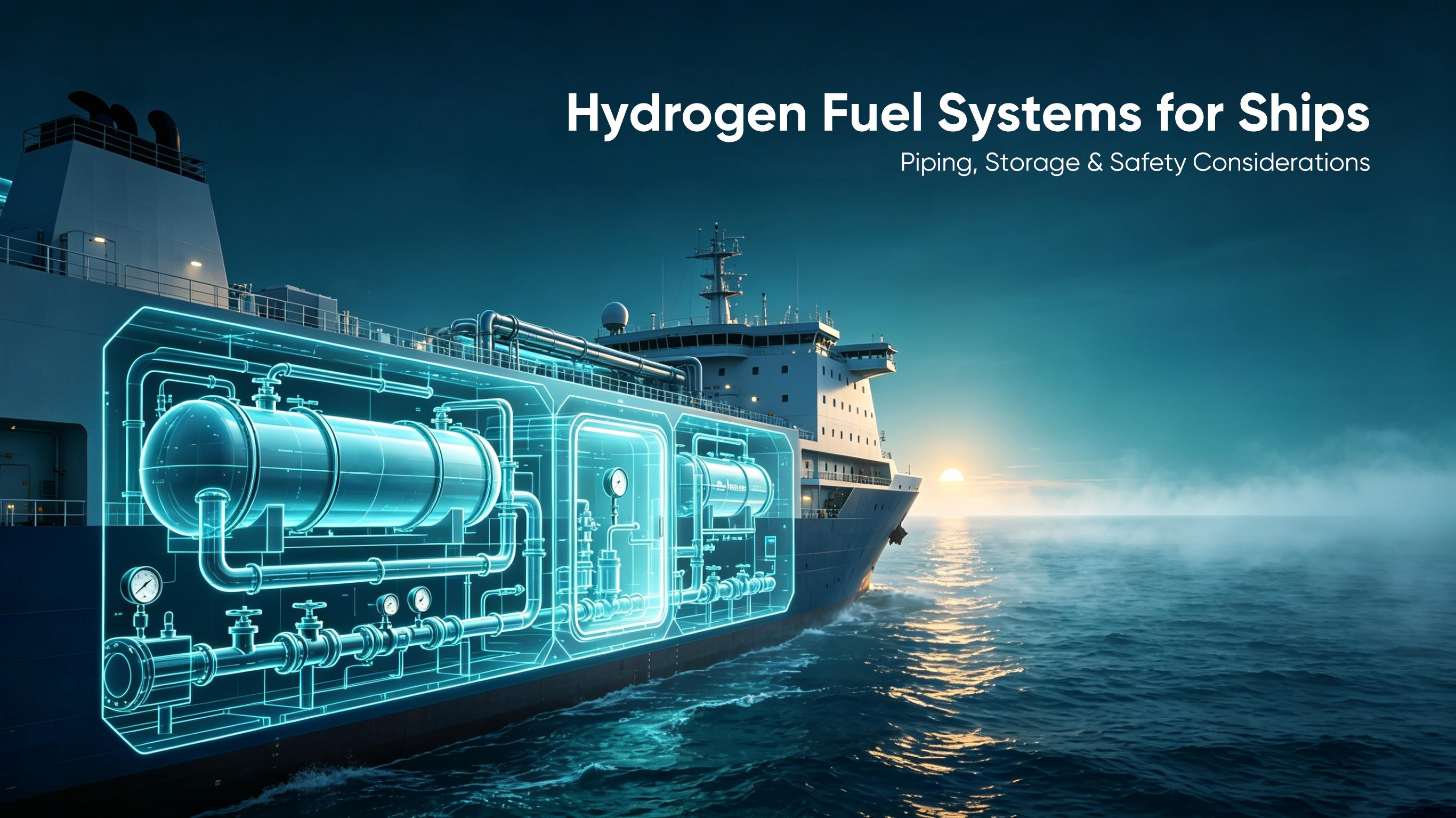
Hydrogen fuel systems for ships combine hydrogen storage, fuel processing, piping networks, pressure control equipment, ventilation systems, leak detection, and safety devices to provide energy for marine propulsion. Depending on the vessel design, hydrogen can power fuel cells, internal combustion engines, or hybrid systems that combine electric motors with conventional propulsion equipment.
Most marine hydrogen systems include:
The biggest engineering challenges include hydrogen storage, high pressure management, boil-off gas handling, material compatibility, and safety protection.
A hydrogen fuel system is an integrated marine energy system designed to store, transport, control, and supply hydrogen to propulsion or power-generation equipment on board a vessel.
Unlike traditional marine fuel systems that use diesel or heavy fuel oil, hydrogen fuel systems use hydrogen as the primary energy source. The hydrogen can be stored as liquid hydrogen at extremely low temperatures or as compressed gas in high-pressure storage tanks.
Hydrogen can then be converted into electricity through fuel cells or burned directly in internal combustion engines.
A complete hydrogen fuel system usually includes:
As the maritime industry looks for alternatives to fossil fuels, hydrogen and fuel cells have become one of the most discussed zero-carbon technologies.
International shipping faces increasing pressure to reduce greenhouse gas emissions.
Conventional marine fuels produce:
Hydrogen propulsion produces no carbon emissions at the point of use when pure hydrogen is consumed in fuel cells.
Several factors are driving the adoption of hydrogen-powered vessels:
Many projects in the United States, Europe, Japan, South Korea, and China are accelerating hydrogen-powered shipping technologies.
The operating process generally follows these steps:
The exact process depends on whether the vessel uses fuel cells or direct hydrogen combustion.
Storage is one of the most challenging parts of hydrogen-powered ship design.
The three most common storage methods include:
| Storage Method | Operating Condition | Typical Application |
|---|---|---|
| Compressed hydrogen | High pressure | Small vessels |
| Liquid hydrogen | Cryogenic temperature | Medium and large vessels |
| Chemical carriers | Bound hydrogen | Future applications |
Hydrogen tanks must withstand demanding operating conditions.
Important design considerations include:
Liquid hydrogen storage requires insulated cryogenic tanks that can maintain temperatures near -253°C.
Compressed hydrogen storage requires tanks designed for pressures that may exceed 350 bar or 700 bar.
Marine hydrogen piping systems transport fuel safely from storage tanks to propulsion equipment.
Typical piping components include:
Hydrogen molecules are extremely small. Because of this, piping materials must resist hydrogen permeation and hydrogen embrittlement.
Compression hydrogen technology allows fuel to be stored at much higher energy densities.
Compression equipment performs several functions:
Because hydrogen systems often operate under high pressure, pressure monitoring devices continuously track system performance.
A fuel cell converts hydrogen into electricity through an electrochemical reaction.
Unlike combustion-based systems, fuel cells do not burn fuel.
Common marine fuel cell technologies include:
Hydrogen and fuel cells generate electricity with high efficiency while reducing local emissions.
Hydrogen is colorless, odorless, and highly flammable.
Leak detection systems continuously monitor:
Ventilation systems remove accumulated hydrogen before concentrations reach hazardous levels.
Advantages:
Disadvantages:
Advantages:
Disadvantages:
| Factor | Liquid Hydrogen | Compressed Hydrogen |
|---|---|---|
| Storage temperature | Cryogenic | Ambient |
| Storage pressure | Low | High pressure |
| Energy density | Higher | Lower |
| Tank complexity | Higher | Lower |
| Space efficiency | Better | Limited |
Hydrogen can power ships through two different technologies.
Advantages:
Disadvantages:
Advantages:
Disadvantages:
| Comparison | Fuel Cells | Internal Combustion Engines |
|---|---|---|
| Energy conversion | Electrochemical | Combustion |
| Efficiency | Higher | Lower |
| Emissions | Very low | Low |
| Mechanical complexity | Moderate | Higher |
The environmental benefits of hydrogen depend heavily on hydrogen production methods.
Green hydrogen production uses renewable electricity to split water through electrolysis.
Energy sources include:
Blue hydrogen uses natural gas while capturing carbon emissions.
Gray hydrogen production relies on fossil fuels without carbon capture.
As hydrogen generation technologies improve, green hydrogen is expected to become the preferred marine fuel source.
Hydrogen adoption depends on the development of marine fueling stations.
Future bunkering infrastructure will require:
Many ports are already testing pilot hydrogen bunkering projects.
However, large-scale deployment remains limited compared with conventional marine fuels.
Hydrogen can weaken some metals over time.
Common material choices include:
Hydrogen molecules can escape through extremely small openings.
Protection measures include:
Marine safety systems usually include:
Marine hydrogen systems must comply with:
Several technologies are expected to shape the future of hydrogen propulsion:
Hydrogen-powered ferries, offshore support vessels, research ships, and coastal cargo vessels are already entering commercial service.
As infrastructure expands, hydrogen could become one of the leading alternatives to conventional marine fuels.
Hydrogen propulsion is a marine power system that uses hydrogen to generate energy for ship movement. The energy can be produced through fuel cells or by burning hydrogen in internal combustion engines.
Liquid hydrogen provides a much higher energy density than compressed gas, allowing ships to store more fuel in a smaller space.
Fuel cells generally provide higher efficiency and lower emissions than conventional diesel engines. However, fuel cell systems currently have higher installation costs.
Hydrogen tanks store fuel either as compressed gas under high pressure or as liquid hydrogen in cryogenic storage systems.
Hydrogen can be used safely when ships employ proper engineering controls, including leak detection, ventilation, pressure monitoring, double-wall piping, and emergency shutdown systems.
Hydrogen has significant potential to reduce dependence on fossil fuels, especially for short-sea shipping, ferries, and specialized vessels. Wider adoption will depend on hydrogen production costs, bunkering infrastructure, and technological development.
Hydrogen fuel systems combine advanced storage technology, specialized piping, pressure management, safety systems, and modern propulsion equipment.
Whether ships use liquid hydrogen, compressed hydrogen, fuel cells, or internal combustion engines, every component must work together to ensure safe and efficient operation.
Although technical and infrastructure challenges remain, hydrogen propulsion continues to gain attention as the maritime industry moves away from fossil fuels and toward lower-emission energy solutions.