

EN
Get In Touch

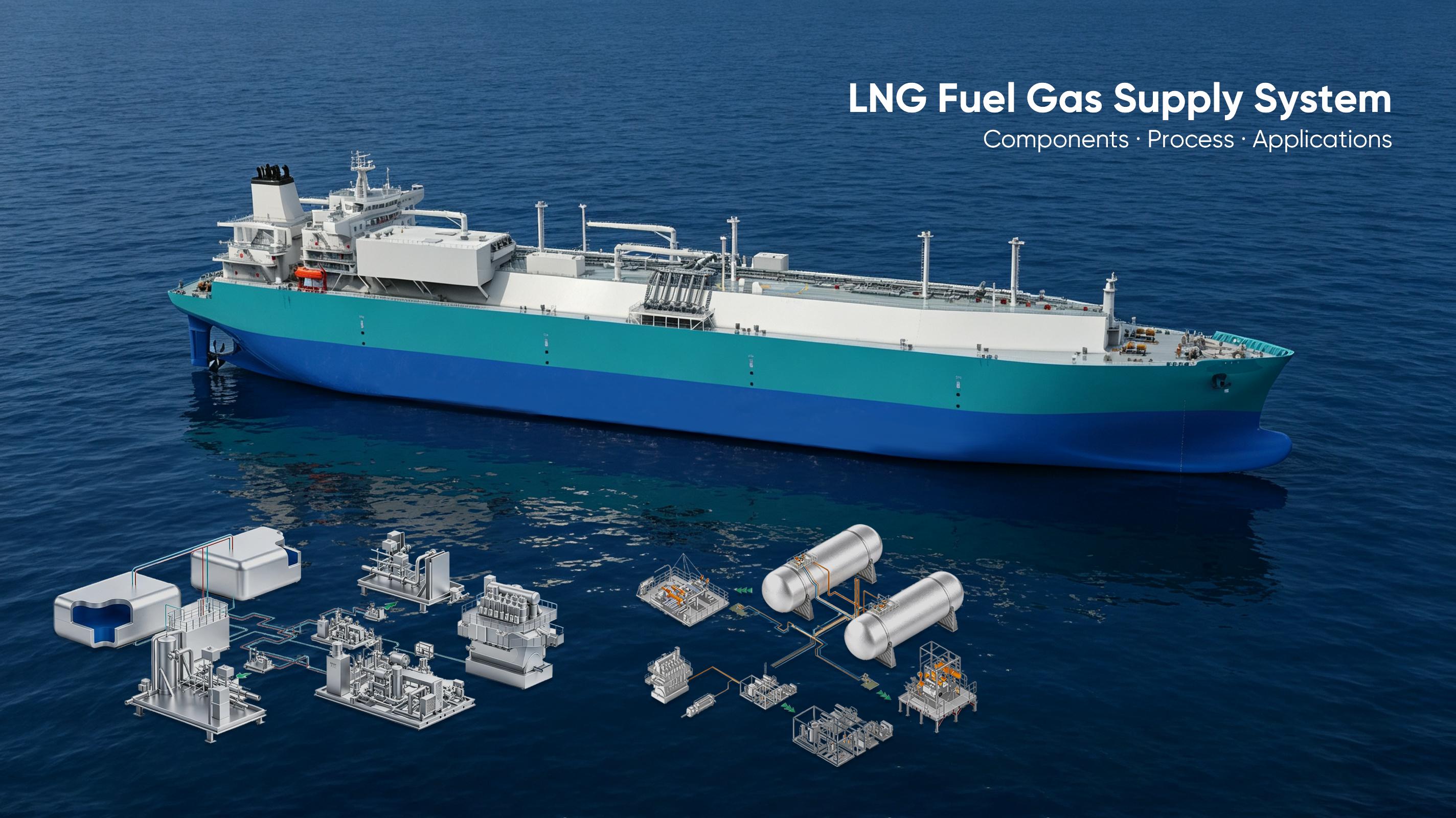
An LNG Fuel Gas Supply System (FGSS) is an integrated system that stores, conditions, controls, and delivers LNG to a ship's engines at the required pressure, temperature, and flow rate.
The system usually includes LNG storage tanks, fuel preparation equipment, pumps, vaporizers, gas heaters, pressure control devices, safety systems, automation systems, and gas supply pipelines.
As more vessels adopt LNG as a marine fuel to comply with stricter emission limits, the fuel gas supply system has become a standard solution for LNG carriers, container ships, ferries, cruise ships, offshore vessels, and bulk carriers.
An LNG Fuel Gas Supply System (FGSS) is a complete fuel delivery system that converts liquefied natural gas from its cryogenic storage condition into usable fuel for marine engines.
LNG is stored at approximately -162°C (-260°F) in insulated storage tanks. Before the fuel reaches the engine, the system must:
The supply system FGSS acts as the connection between LNG storage and the vessel's propulsion system.
The shipping industry faces increasingly strict environmental regulations. International regulations continue to lower allowable emissions from marine vessels.
Compared with conventional marine fuels, LNG fueled ships can significantly reduce emissions.
The advantages of LNG include:
| Environmental Factor | Reduction Potential |
|---|---|
| Sulfur oxide (SOx) | Nearly 100% |
| Particulate matter | Up to 95% |
| Nitrogen oxide (NOx) | Up to 85% |
| Carbon dioxide (CO₂) | 20-25% |
One of the main reasons for adopting LNG as a marine fuel is compliance with global and regional emission limits.
Lower nitrogen oxide emissions also help ships comply with environmental standards in emission control areas (ECAs).
Storage tanks are the foundation of every LNG fueled vessel.
Because liquefied natural gas must remain at extremely low temperatures, the tanks require specialized insulation and cryogenic designs.
Common tank types include:
Characteristics:
Applications:
Characteristics:
Applications:
Fuel pumps move LNG from storage tanks to downstream equipment.
Depending on engine requirements, the system may use:
The selected pump depends on:
Vaporizers convert liquefied natural gas into gaseous fuel.
Common vaporizer technologies include:
The vaporization process must maintain stable gas quality while preventing temperature fluctuations.
After vaporization, the gas temperature may still be too low for engine operation.
Gas heaters increase the fuel temperature before the gas enters the engine.
Their functions include:
Marine engines require a specific fuel pressure range.
Pressure control equipment maintains stable operating conditions by:
The gas supply system includes a network of insulated pipelines that transport LNG and natural gas throughout the vessel.
Typical piping materials include:
The piping network usually contains:
Safety systems are mandatory for every supply system FGSS.
Typical safety features include:
The process begins with LNG bunkering.
LNG is transferred from a bunker vessel, terminal, or truck into the ship's storage tanks.
During LNG bunkering, operators monitor:
Strict operating procedures reduce safety risks during fuel transfer.
After bunkering, liquefied natural gas remains inside insulated storage tanks.
Because heat can slowly enter the tank, some LNG naturally evaporates and creates boil-off gas.
The system continuously monitors:
When the engines require fuel, pumps increase LNG pressure according to engine specifications.
Low-pressure dual-fuel engines and high-pressure gas injection engines have different fuel requirements.
The pressurized liquid enters the vaporizer.
At this stage, the liquid transforms into natural gas.
The system controls:
The gas passes through heaters and pressure control equipment.
The objective is to ensure that the gas meets the engine manufacturer's specifications.
The conditioned gas flows through the fuel gas supply pipelines and enters the engine.
Modern dual-fuel engines can switch between:
This flexibility improves operational reliability.
Characteristics:
Applications:
Characteristics:
Applications:
LNG carriers commonly use boil-off gas as fuel.
Their fuel gas supply systems are designed to handle large fuel volumes and continuous operation.
Many new container vessels have adopted LNG because of tightening emission limits.
Benefits include:
Cruise operators use LNG to reduce air pollution near populated coastal areas.
Advantages include:
Short-distance ferry operators often select LNG because regular routes simplify LNG bunkering operations.
Offshore support vessels use LNG to improve environmental performance while maintaining operational flexibility.
An LNG fuel system requires:
The initial investment is often higher than conventional fuel systems.
Storage tanks occupy more space than traditional marine fuel tanks.
Ship designers must optimize tank placement during the design phase.
Although LNG bunkering networks continue to expand, infrastructure remains limited in some regions.
Fuel availability can influence route planning.
The combination of cryogenic temperatures, pressurized gas, and strict safety requirements increases system complexity.
Regular inspection and maintenance are necessary for long-term reliability.
When designing an FGSS, engineers usually evaluate the following factors:
An effective system balances safety, efficiency, maintenance, and operating costs.
Several industry trends are influencing LNG system development:
At the same time, many shipowners are exploring multi-fuel platforms that can support LNG, methanol, ammonia, and other alternative fuels.
However, liquefied natural gas is expected to remain an important transition fuel for many years.
FGSS stands for Fuel Gas Supply System. It is the onboard system that stores, processes, and delivers gaseous fuel to marine engines.
LNG as a marine fuel helps reduce sulfur oxide, particulate matter, carbon dioxide, and nitrogen oxide emissions while supporting compliance with environmental regulations.
The main components include:
LNG bunkering transfers liquefied natural gas from a shore terminal, truck, or bunker vessel into a ship's storage tanks under controlled operating conditions.
Common applications include:
Natural gas combustion produces lower combustion temperatures than conventional marine fuels. This reduces the formation of nitrogen oxide during engine operation.
Yes. Modern FGSS designs include multiple safety features, including gas detection, ventilation, pressure relief, emergency shutdown systems, and continuous monitoring.
LNG storage refers to the cryogenic tanks that hold liquefied natural gas. The fuel gas supply system includes all equipment that stores, processes, conditions, and delivers the fuel to the engine.