

EN
Get In Touch

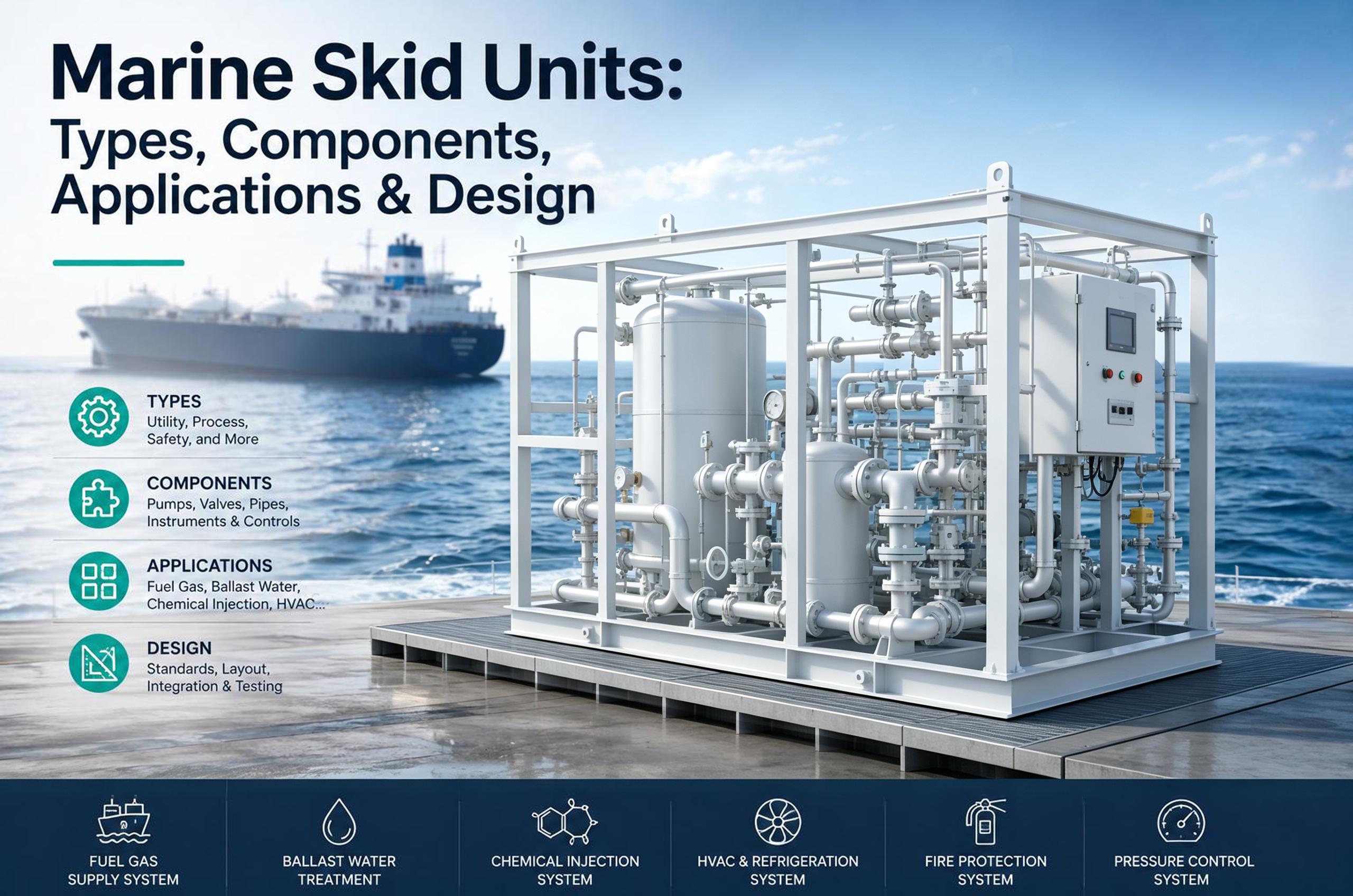
A marine skid unit is a prefabricated and self-contained equipment package installed on a structural frame. It combines mechanical, electrical, instrumentation, and control equipment into one integrated assembly.
Marine skid units can include pumps, valves, heat exchangers, storage vessels, filtration systems, pressure regulating devices, sensors, control panels, and piping. They are widely used in fuel gas supply systems, natural gas processing, water treatment, LNG-powered vessels, offshore platforms, and engine room operations.
Compared with traditional onboard assembly, a skid mounted design shortens installation time, improves system integration, reduces labor requirements, and offers a more cost effective solution for shipbuilders and offshore operators.
A marine skid unit is a modular equipment package built on a steel frame or base plate. Instead of assembling every component separately on board, manufacturers install and test the entire package in a workshop before delivery.
A typical skid unit may include:
After factory acceptance testing, the complete module is transported to the vessel and connected to the ship's piping and electrical systems.
In simple terms, a skid unit is a "plug-and-install" solution for marine and offshore applications.
Modern vessels are becoming more complex. Shipowners are adopting LNG, methanol, ammonia, and hydrogen technologies. At the same time, environmental regulations continue to become more demanding.
Traditional onboard construction often creates several challenges:
A skid mounted solution helps solve many of these problems.
The advantages include:
Fuel gas systems are among the most common marine skid applications.
These units deliver fuel from storage tanks to engines while maintaining the required pressure and temperature conditions.
Typical components include:
Applications include:
Natural gas skid packages are designed to process, regulate, filter, and distribute gas before it enters the combustion system.
Functions may include:
These systems help maintain stable gas supply conditions and improve equipment performance.
Water treatment systems are essential for many marine operations.
A water treatment skid may include:
Common applications include:
Pump skids are designed to transfer liquids throughout the vessel.
Applications include:
A complete pump skid typically combines pumps, valves, pipelines, instruments, and monitoring devices into one compact package.
These systems control pressure and measure fluid movement throughout the piping network.
Typical equipment includes:
Maintaining stable pressure and temperature conditions is especially important in marine fuel systems.
The steel frame supports all equipment and provides a stable installation platform.
The frame must withstand:
The piping network connects all equipment within the skid.
Materials commonly include:
The pipe design must consider:
Pumps move liquids, while compressors handle gases.
Equipment selection depends on:
Pressure regulating systems maintain safe operating conditions.
They typically include:
In fuel gas applications, pressure regulation directly affects engine performance and fuel efficiency.
Many skid packages include a storage tank or buffer vessel.
Examples include:
The storage tank design depends on:
A water tank may be incorporated into treatment systems, cooling systems, or freshwater supply systems.
Common design considerations include:
Modern marine skid units rely heavily on automation.
Instrumentation may include:
Real-time monitoring improves operational stability and simplifies maintenance.
Engineers must evaluate operating pressure and temperature during the design phase.
Questions typically include:
Incorrect design assumptions can reduce system reliability and increase maintenance requirements.
Flow rates determine equipment sizing.
Engineers must calculate:
Undersized equipment can restrict system performance, while oversized equipment may increase investment costs.
Marine installations always face space limitations.
Designers must consider:
Three-dimensional modeling is often used to improve layout efficiency.
Ships operate in constantly changing environments.
A skid mounted assembly must tolerate:
Additional supports and reinforcement may be necessary.
Material selection affects:
Common materials include:
| Component | Common Materials |
|---|---|
| Pipes | Carbon steel, stainless steel |
| Tanks | Stainless steel, duplex stainless steel |
| Frames | Structural steel |
| Valves | Stainless steel, bronze |
| Fasteners | Stainless steel |
Successful system integration requires close coordination between multiple engineering disciplines.
The design process should include:
Integrated design reduces installation conflicts and improves project efficiency.
LNG vessels require sophisticated fuel gas delivery systems.
Typical skid applications include:
Offshore facilities use skid systems for:
Modular construction simplifies transportation and installation.
Commercial vessels use skid units in:
FPSOs and floating production units often depend on modular equipment because large process systems must be installed within limited deck space.
Many shipyards now prefer prefabricated skid packages because they provide a more cost effective construction approach.
Benefits include:
Factory fabrication also allows equipment to be tested before shipment, reducing project risks during vessel construction.
Before finalizing a design, engineers should verify:
A standardized design process helps improve quality and reduces unexpected installation issues.
A skid mounted system is a complete equipment package assembled on a structural frame. It is manufactured, tested, and delivered as one unit before installation on a vessel.
Traditional installation requires equipment to be assembled individually on board. A skid unit is preassembled and tested in a factory, which reduces installation time and improves quality control.
They are commonly used in natural gas processing, gas supply systems, fuel gas systems, water treatment systems, cooling systems, chemical injection systems, and offshore production facilities.
They reduce onboard labor, shorten construction schedules, improve quality management, minimize rework, and simplify commissioning.
A fuel gas skid may include compressors, vaporizers, filters, pressure regulating equipment, valves, flow meters, control systems, safety devices, and instrumentation.
Engineers evaluate operating pressure, temperature, flow rates, available space, vibration, material selection, and integration requirements before selecting equipment and developing the final design.