

EN
Get In Touch

Marine piping design is the engineering process of selecting pipe materials, dimensions, pressure ratings, layouts, supports, valves, fittings, and fabrication methods to ensure safe and reliable fluid transportation on ships and offshore structures.
A well-designed marine piping system must consider pressure, temperature, vibration, corrosion, fluid flow, mechanical strength, maintenance requirements, and applicable classification society rules.
Common marine piping systems include fuel oil systems, cooling water systems, compressed air systems, water supply systems, cargo piping, fire protection systems, ballast systems, and hydraulic systems.
Marine piping design is the process of planning, calculating, and arranging pipe networks used to transport liquids and gases throughout a vessel.
Unlike land-based industrial facilities, ships operate in constantly changing environments. Rolling, pitching, vibration, temperature fluctuations, humidity, and seawater exposure all affect piping performance.
Marine piping design generally includes:
The goal is to ensure that the piping system performs safely throughout its expected service life.
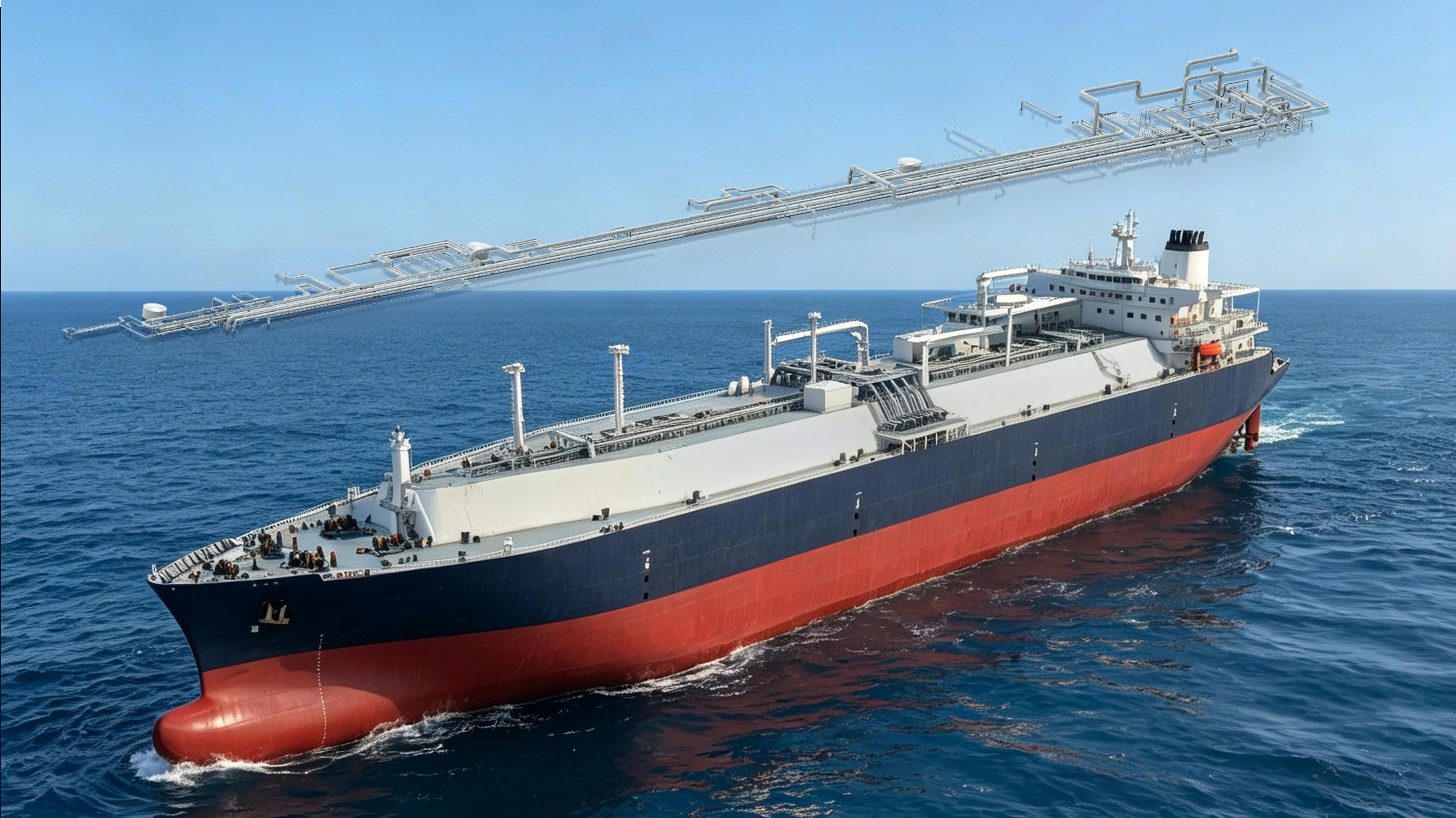
Marine piping operates under different conditions than many land-based systems.
Ships are exposed to:
Many vessels contain hundreds of separate piping networks serving different functions.
These systems often pass through:
Each area presents different design challenges.
Modern vessels contain numerous interconnected piping systems.
The most common systems include the following.
The fuel oil system transports fuel from storage tanks to engines and auxiliary equipment.
Typical components include:
Because fuel may be flammable, oil piping systems require strict safety measures.
Design considerations include:
Cooling water systems remove heat from engines, generators, compressors, and other equipment.
Typical marine cooling systems include:
Design considerations include:
Because seawater contains chlorides, material selection becomes especially important.
Compressed air systems provide air for:
These systems often operate under high pressure.
Design engineers must consider:
Marine water supply systems distribute potable water and service water throughout the vessel.
Typical applications include:
The piping material must comply with the requirements for the intended water quality.
Fire protection systems are among the most important safety systems on a ship.
Examples include:
These systems must remain operational under emergency conditions.
Every marine piping system should be evaluated according to four primary engineering considerations:
Pressure is one of the first factors considered during pipe design.
The internal pressure determines:
Pressure calculations must account for both normal operating pressure and possible pressure fluctuations.
Many marine systems operate under high pressure, including:
As pressure increases, the piping system must withstand larger internal forces.
Design engineers must verify:
Pressure temperature conditions directly affect pipe selection.
As temperature increases, some materials experience reduced strength.
Therefore, pipe materials should always be selected according to the expected pressure and temperature range.
Important factors include:
Temperature affects almost every aspect of marine piping.
Higher temperatures can cause:
Lower temperatures can increase material brittleness.
Pipes expand when heated and contract when cooled.
If thermal movement is restricted, the resulting stresses can damage:
Engineers often use:
to accommodate thermal movement.
Different materials respond differently to temperature changes.
For example:
Material selection should always consider the expected operating conditions.
Vibration is unavoidable on ships.
Common vibration sources include:
Over time, excessive vibration can cause:
Several design methods can reduce vibration.
Pipe supports should be placed at appropriate intervals.
Long unsupported sections may amplify vibration.
Flexible connections can absorb movement and reduce vibration transmission.
Equipment foundations should be designed to minimize vibration transfer to connected piping.
Excessive fluid flow velocity may increase turbulence and vibration.
Engineers should establish appropriate flow limits during the design phase.
Corrosion is one of the most common causes of piping deterioration in marine environments.
Common causes include:
Carbon steel is widely used because it offers:
However, carbon steel has limited corrosion resistance.
Protective measures may include:
Stainless steel is frequently used in marine applications because it offers excellent resistance to corrosion.
Common grades include:
Suitable for many general applications.
Provides improved resistance to chloride corrosion.
Typical applications include:
These materials combine:
They are commonly used in:
Choosing the correct material requires balancing multiple factors.
Mechanical strength determines the ability of a material to withstand applied loads.
The material must resist:
Material selection should consider:
Engineers should evaluate:
Longer service life often reduces maintenance costs and replacement frequency.
The movement of liquids and gases through piping requires careful analysis.
Several factors influence fluid flow.
A smaller pipe diameter increases flow velocity.
A larger diameter reduces pressure losses but increases material costs.
Pipe routing affects:
Shorter and more direct routes often improve efficiency.
Valves regulate flow throughout the piping network.
Common marine valves include:
Valve selection depends on:
Every commercial vessel must comply with applicable classification society rules.
These organizations establish standards for:
Common classification societies include:
The selected rules depend on the vessel type and operating area.
Quality control begins during the design stage rather than after fabrication.
A comprehensive quality program typically includes:
Confirm that materials meet project specifications.
Verify welding procedures and welder qualifications.
Ensure that fabricated components meet drawing requirements.
Common inspection methods include:
Pressure testing verifies piping integrity before commissioning.
Documentation may include:
This can result in excessive stress and pipe failure.
Choosing the wrong material may shorten service life.
Poor support placement can lead to vibration and sagging.
High flow velocity may increase erosion and pressure losses.
Marine environments accelerate corrosion and should always be considered during design.
Marine piping design is the engineering process of planning, sizing, selecting, and arranging piping systems used on ships and offshore structures.
The main factors include pressure, temperature, vibration, corrosion, material selection, fluid flow, support design, and operating conditions.
Pressure affects pipe dimensions, wall thickness, material selection, valve selection, and system safety.
Temperature affects thermal expansion, material strength, and pipe stress.
Excessive vibration can lead to fatigue, cracking, leakage, and equipment damage.
Stainless steel provides excellent corrosion resistance and long service life in seawater and high-humidity environments.
Carbon steel is generally less expensive and easier to fabricate, while stainless steel provides better corrosion resistance.
Common systems include fuel oil systems, cooling water systems, compressed air systems, water supply systems, cargo systems, ballast systems, and fire protection systems.
Classification society rules establish standards for materials, fabrication, inspection, testing, and vessel safety.
Quality control helps verify that materials, welding, fabrication, inspection, and testing meet the required standards before the piping system is placed into service.
Successful marine piping design requires more than selecting a pipe and connecting it to equipment.
Engineers must consider pressure, temperature, vibration, corrosion, fluid flow, material properties, and real-world operating conditions.
Whether the system transports fuel oil, cooling water, compressed air, or potable water, every design decision affects performance, maintenance, and service life.
By combining suitable materials such as carbon steel and stainless steel with proper engineering practices, marine piping systems can operate safely and efficiently throughout a vessel's lifecycle.