

EN
Get In Touch

Double-wall piping systems are engineered piping arrangements with a primary carrier pipe inside a secondary outer pipe or enclosure. The carrier pipe transports the process fluid, while the outer pipe provides a second layer of containment, protection, or controlled ventilation.
These systems are widely used in piping systems that handle hazardous, toxic, flammable, cryogenic, or environmentally sensitive fluids. A double-wall design can also include leak detection, ventilation, insulation, or a controlled interspace between the two pipes.
Common configurations include:
The correct design depends on the fluid, pressure, temperature, pipe materials, installation environment, leak-detection method, and applicable engineering standards.
A double-wall piping system is a piping arrangement in which one pipe is installed inside another pipe or protective enclosure. The inner pipe, commonly called the carrier pipe, carries the process fluid. The second pipe, commonly called the outer pipe, provides secondary containment, mechanical protection, thermal insulation, or a controlled space for monitoring and ventilation.
The space between the two walls is often called the annular space or interstitial space.
Unlike a conventional single-wall pipe, a walled pipe system can provide an additional layer between the transported material and the surrounding environment.
This makes double-wall piping useful for the transport of hazardous materials, including flammable gases, toxic chemicals, corrosive fluids, cryogenic liquids, and LNG.
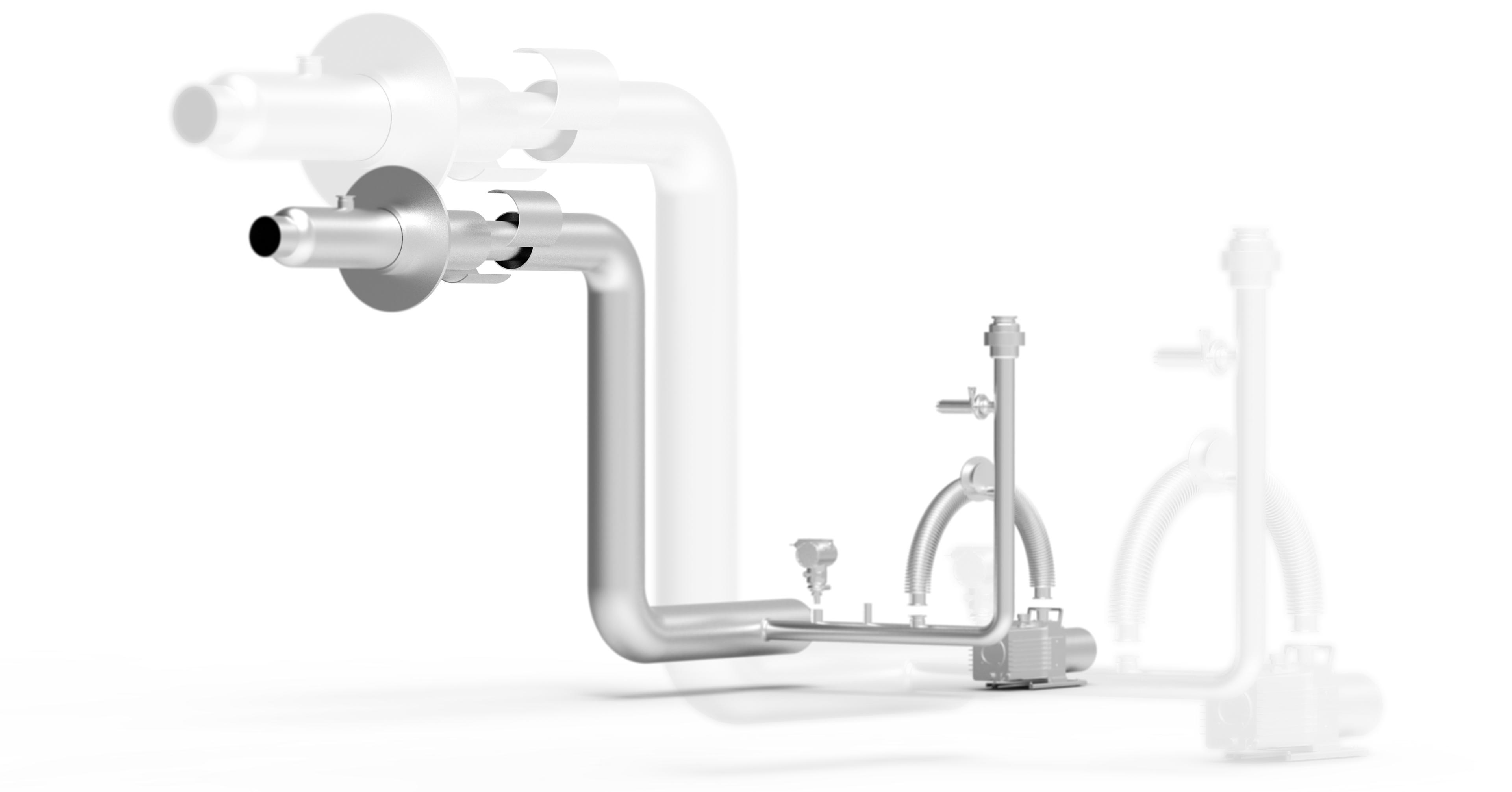
A basic double walled pipe consists of four functional areas:
The annular space can be designed in different ways.
For example, it may be:
The choice depends on the service conditions and safety objectives.
A complete system normally contains more than two pipes. Its design may include pipe sections, fittings, valves, supports, insulation, sensors, vents, drains, and monitoring equipment.
The carrier pipe is the primary pressure boundary for the process fluid.
Its material and wall thickness are selected according to:
Stainless steel is commonly selected for corrosive, hygienic, cryogenic, and high-purity services. Carbon steel, nickel alloys, and other materials may also be used depending on the application.
The outer pipe surrounds the carrier pipe.
It may provide:
The outer pipe does not always have the same pressure rating as the carrier pipe. Its required design depends on the specific double-wall arrangement and the possible conditions inside the annular space.
The annular space is the gap between the carrier pipe and outer pipe.
This space can serve different purposes.
For hazardous-fluid service, it can provide a controlled area where a leak from the carrier pipe can be detected before the released fluid reaches the surrounding environment.
For cryogenic service, the space can be evacuated to reduce heat transfer.
For gas systems, it can be ventilated or filled with an inert gas such as nitrogen.
Leak detection is one of the main reasons for using double-wall piping in hazardous-fluid applications.
Possible detection methods include:
The detection method should match the transported fluid and the design of the annular space.
Ventilation is used when the annular space is designed to remove leaked or permeated gas.
A ventilation system may include:
Vent locations should be selected based on the properties of the transported gas and the surrounding installation.
For a positive-pressure nitrogen-filled system, the annular space is maintained with dry nitrogen.
The system may include:
The nitrogen pressure and alarm settings must be established during system design.
A vacuum insulation double wall pipe uses an evacuated annular space to reduce heat transfer.
Typical components include:
This arrangement is common for cryogenic fluids such as LNG and other liquefied gases.
Double-wall piping is not one single design. Different applications require different arrangements.
A low pressure gas ventilation double wall pipe uses a ventilated annular space around the carrier pipe.
If gas escapes from the carrier pipe, the ventilation system can direct the gas to a controlled discharge location.
This configuration may be used for low-pressure flammable or hazardous gases where controlled ventilation is suitable.
The design should consider:
A high pressure gas ventilation double wall pipe is designed for gas services where the carrier pipe operates at higher pressure.
A leak from a high-pressure carrier pipe can create rapid gas release and high flow through the annular space. Therefore, the design must account for pressure containment, vent capacity, gas dispersion, and emergency isolation.
The outer pipe and annular-space components must be designed for the credible pressure conditions that could occur during a carrier-pipe failure.
A positive pressure Nitrogen filled double wall pipe maintains the annular space at a controlled nitrogen pressure.
The nitrogen provides an inert atmosphere and can also support leak monitoring.
A pressure change in the annular space may indicate a problem with the carrier pipe or outer containment system.
This configuration can be useful where:
The nitrogen system must be designed to avoid creating an unsafe pressure condition for either pipe.
A vacuum insulation double wall pipe uses a vacuum in the annular space to limit heat transfer.
This is particularly useful for cryogenic applications.
The basic structure consists of:
Process fluid → carrier pipe → insulation/vacuum space → outer pipe → environment
Reducing heat transfer helps control:
Vacuum-insulated double-wall piping is commonly considered for LNG, liquid nitrogen, liquid oxygen, liquid hydrogen, and other cryogenic services.
LNG is liquefied natural gas, normally stored and transported at cryogenic temperatures.
LNG piping systems require careful control of heat transfer, thermal contraction, vapor generation, pressure, and material performance.
A double-wall design for LNG may use a vacuum-insulated annular space.
The carrier pipe contains the LNG, while the outer pipe forms a protective jacket around the cryogenic piping.
The design can help:
Materials must remain suitable at cryogenic temperatures. Austenitic stainless steels are commonly considered for cryogenic piping because of their low-temperature toughness, although material selection must always be based on the actual service and applicable design requirements.
A conventional pipe provides one primary containment boundary. A double-wall system adds another layer around that boundary.
The main reasons for using it include:
If the carrier pipe develops a leak, the outer pipe can contain or control the released material.
Double-wall piping can reduce the risk of hazardous liquids or gases reaching soil, water, occupied areas, or other sensitive locations.
This is one reason these systems are used for the transport of hazardous materials.
The annular space provides a defined area where pressure, gas, liquid, or vacuum conditions can be monitored.
For cryogenic applications, a vacuum jacket can reduce heat transfer.
The outer pipe can protect the carrier pipe against impact and other external damage.
For gas applications, the annular space can be ventilated or maintained with nitrogen.
Double-wall piping is used across several industries.
Applications include:
Chemical plants may use double-wall systems for:
High-purity gases and chemicals often require controlled piping environments.
Double-wall construction can provide an additional containment layer and support leak monitoring.
Certain process fluids may require high-purity materials and controlled containment.
Stainless steel double-wall piping may be selected where material cleanliness and corrosion resistance are important.
Hydrogen piping can require special attention to material compatibility, leakage, pressure, ventilation, and ignition control.
Double-wall configurations may be considered where additional containment or controlled ventilation is required.
Laboratories may use double-wall piping for hazardous gases, corrosive chemicals, or other materials that require additional containment.
A reliable design starts with the service conditions rather than simply selecting two pipes.
Engineers should identify:
These properties affect the carrier pipe, outer pipe, ventilation, detection, and emergency response design.
The carrier pipe must be designed for the process pressure.
The outer pipe must also be evaluated for credible pressure scenarios in the annular space.
These scenarios can include:
Temperature affects:
Cryogenic systems require special attention because the carrier pipe and outer pipe can experience large temperature differences.
The carrier pipe may expand or contract differently from the outer pipe.
The design may therefore require:
Supports must accommodate the weight and movement of both pipe layers.
For cryogenic piping, supports also need to limit heat transfer while maintaining mechanical stability.
Double-wall elbows, tees, reducers, valves, flanges, and other components need to maintain the required containment and monitoring arrangement.
The design should prevent the outer containment from being interrupted unnecessarily.
The system should consider where leaked liquid or gas will go.
Drain and vent points need to be positioned to avoid:
The system should provide practical access for:
A complicated double-wall arrangement can be difficult to maintain if access is not considered during the design stage.
Material selection depends on the process fluid and operating conditions.
Stainless steel is frequently used for double-wall piping because many stainless grades offer good corrosion resistance and suitable mechanical properties across a wide range of applications.
For cryogenic services, the selected stainless-steel grade must have suitable low-temperature performance.
Carbon steel may be used for certain outer pipes or non-cryogenic services when corrosion and temperature conditions allow it.
Nickel alloys may be selected for aggressive chemicals or demanding temperature conditions where standard stainless steel is not suitable.
Cryogenic double-wall systems can incorporate suitable insulation materials within a vacuum jacket.
Material selection depends on:
| Feature | Single-Wall Pipe | Double-Wall Pipe |
|---|---|---|
| Primary fluid containment | Yes | Yes |
| Secondary containment | Usually no | Yes |
| Leak monitoring space | Limited | Available |
| Environmental protection | Depends on installation | Higher potential |
| Gas ventilation | Usually external | Can be integrated into annular space |
| Vacuum insulation | Not normally used | Possible |
| Nitrogen-filled annular space | No | Possible |
| LNG applications | Possible | Common option for specific designs |
| Design complexity | Lower | Higher |
| Installation cost | Usually lower | Usually higher |
| Maintenance requirements | Simpler | More involved |
Double-wall construction is not automatically better for every pipe system. It should be selected when its containment, monitoring, ventilation, or insulation benefits justify the additional design and installation requirements.
Leak detection should be considered together with the annular-space design.
For a liquid system, sensors may detect accumulated liquid.
For a gas system, pressure changes or gas sensors may provide an indication of leakage.
For a vacuum-insulated system, loss of vacuum can indicate degradation of the system.
A practical monitoring system may include:
The detection threshold should be set according to the application and the expected operating range.
Double-wall piping is designed to reduce risk, but it does not remove the need for normal piping safety measures.
Both the carrier pipe and relevant parts of the outer containment system should be evaluated for possible overpressure.
Leak detection should be connected to suitable alarms and response procedures.
Hazardous gases should not be allowed to accumulate in enclosed spaces.
Ventilation and gas detection should be designed according to the gas properties and installation environment.
For flammable gases and liquids, equipment and electrical systems should be suitable for the classified area.
Cryogenic piping can cause severe cold-contact hazards and can affect surrounding materials.
Isolation valves can limit the amount of material released during a leak or equipment failure.
Where applicable, the piping arrangement should be evaluated for external fire exposure and emergency response.
The applicable requirements depend on the industry, fluid, location, pressure, temperature, and system type.
Designers may need to consider relevant piping, pressure equipment, cryogenic, LNG, hazardous-area, and fire-safety requirements.
The exact code set should be confirmed by the responsible engineering team for the project jurisdiction.
The performance of a double-wall piping system depends on both engineering design and fabrication quality.
Quality control may include:
For stainless steel systems, fabrication controls should also prevent contamination that could reduce corrosion resistance or cleanliness.
Correct installation is as important as pipe selection.
Before installation, the contractor should confirm:
The carrier pipe should be aligned correctly inside the outer pipe.
For vacuum-insulated systems, the vacuum jacket must be protected from damage during transportation and installation.
For ventilated systems, the vent path must remain unobstructed.
For nitrogen-filled systems, the nitrogen supply and monitoring system should be commissioned before normal operation.
Testing depends on the piping design and applicable requirements.
Typical activities may include:
The carrier pipe is tested according to the applicable design and inspection requirements.
Connections and containment boundaries may be tested for leakage.
For vacuum-insulated piping, the system may be checked for vacuum performance and leak tightness.
Ventilation flow and pressure conditions should be verified.
A positive-pressure nitrogen system should be checked for:
Sensors and alarms should be checked before the system enters service.
A suitable design can be selected by following a structured process.
Identify the material being transported and its hazards.
Establish:
Decide whether the system needs:
Select carrier and outer-pipe materials based on chemical compatibility, temperature, pressure, corrosion, and mechanical requirements.
Define its:
Account for weight, thermal movement, vibration, seismic loads where applicable, and installation loads.
Establish pressure, leak, vacuum, weld, and instrumentation tests before fabrication.
Make sure sensors, valves, vents, drains, and other service points can be inspected and maintained.
A double-wall piping system consists of a carrier pipe surrounded by an outer pipe or jacket. The carrier pipe transports the process fluid, while the outer pipe provides secondary containment, protection, ventilation, monitoring space, or insulation.
A single-wall pipe has one primary containment boundary. A double walled pipe adds an outer containment or protective layer and can provide an annular space for leak detection, ventilation, nitrogen pressurization, or vacuum insulation.
The carrier pipe is the inner pipe that directly transports the process fluid. It is normally the primary pressure-containing component of the system.
The outer pipe can provide secondary containment, mechanical protection, controlled ventilation, environmental protection, or a vacuum-insulated space around the carrier pipe.
Leak detection allows operators to identify a carrier-pipe leak before the released material reaches the surrounding environment. The detection method may use pressure, gas, liquid, or vacuum monitoring.
Yes. Double-wall piping can be used for LNG applications, particularly where secondary containment and thermal control are required. Vacuum-insulated configurations are commonly considered for cryogenic transfer systems.
A vacuum insulation double wall pipe has an evacuated space between the carrier pipe and outer pipe. The vacuum reduces heat transfer and can help maintain cryogenic temperatures.
It is a double-wall system in which the annular space is maintained at a controlled positive pressure using nitrogen. The nitrogen can provide an inert environment and allow pressure changes in the annular space to be monitored.
It is a double-wall configuration in which the annular space is connected to a controlled ventilation system. It can be used to direct leaked or permeated gas away from the surrounding area.
It is a double-wall piping arrangement for higher-pressure gas service where the annular space is designed for controlled gas management. The design must consider potential release rates, pressure, ventilation, gas detection, and emergency isolation.
Yes. Stainless steel is widely used where corrosion resistance, cleanliness, or cryogenic performance is required. The exact grade should be selected according to the fluid and operating conditions.
No. Double-wall piping does not prevent every carrier-pipe leak. Its purpose is to provide an additional containment, monitoring, ventilation, or insulation layer so that a leak can be detected or controlled more effectively.
Usually, yes. It requires additional material, fabrication, supports, testing, monitoring, and installation work. The additional cost should be evaluated against the containment, safety, environmental protection, and thermal-performance requirements of the project.
A double-wall piping system combines a carrier pipe with an outer containment or protective pipe. The annular space between them can be ventilated, monitored, filled with nitrogen, or evacuated for insulation.
The main benefits include:
Different applications require different configurations. A low-pressure gas ventilation double-wall pipe is not designed in the same way as a high-pressure gas system. Likewise, a positive-pressure nitrogen-filled system has different requirements from a vacuum insulation double wall pipe.
For LNG and other cryogenic services, material selection, thermal contraction, vacuum performance, insulation, and emergency protection require special attention.
The best double-wall design is therefore based on the actual fluid, pressure, temperature, materials, installation environment, leak scenario, and applicable engineering requirements—not simply on the use of two concentric pipes.