

EN
Get In Touch

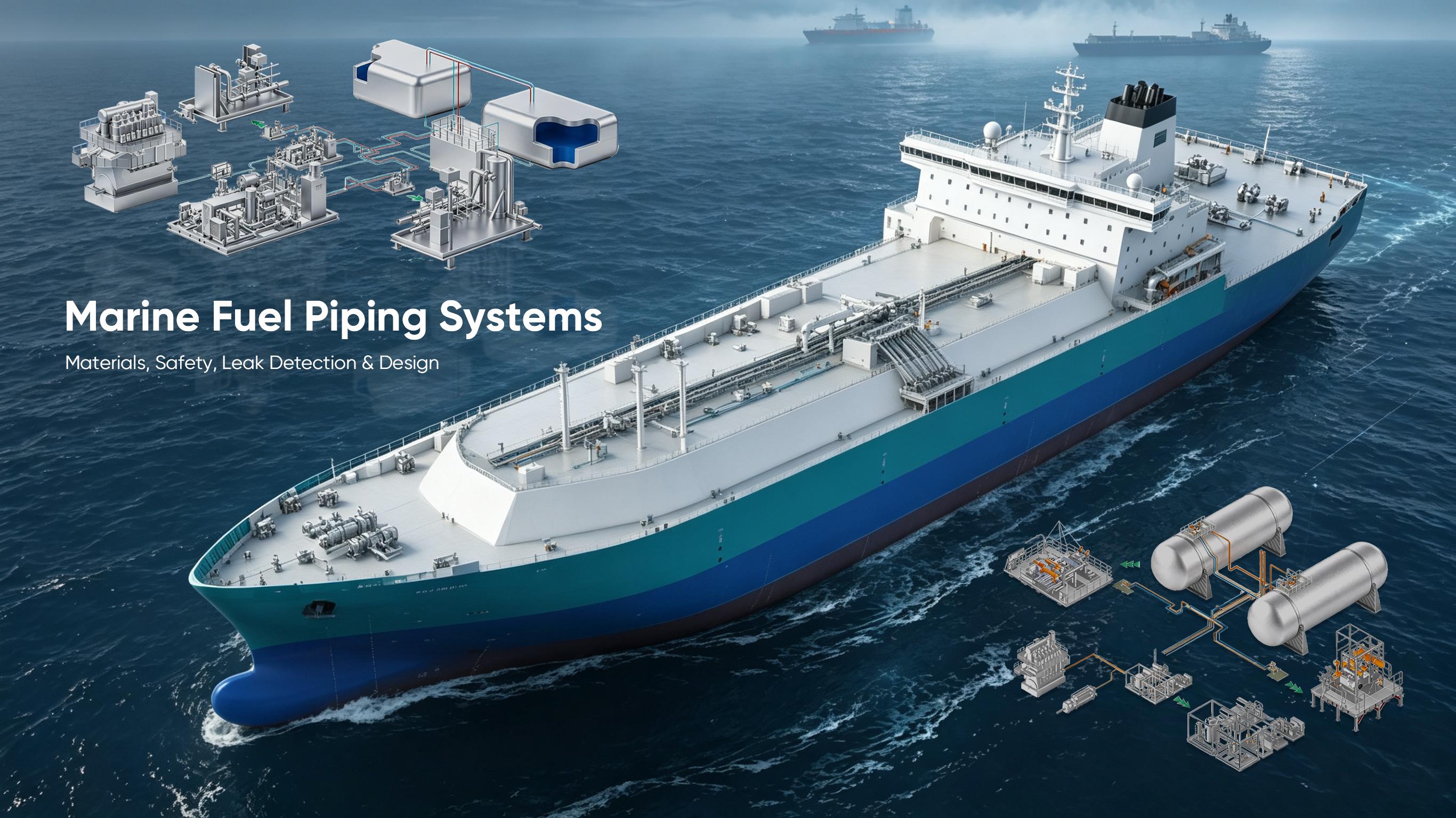
Marine fuel piping systems are engineered pipe networks used to transfer, store, and supply conventional and alternative fuels on ships. These systems must withstand high pressure, temperature changes, vibration, corrosion, and strict marine safety requirements.
Modern fuel piping systems commonly use stainless steel because of its corrosion resistance, mechanical strength, and compatibility with fuels such as LNG, methanol, and ammonia. Advanced designs for LNG Carriers, Methanol fueled ships, and Ammonia-Fueled Vessels also include double-wall piping, leak detection systems, ventilation arrangements, and monitoring equipment to reduce fuel leakage risks.
Marine fuel piping systems are engineered piping arrangements designed to store, transfer, condition, and supply fuel on ships. They consist of pipes, valves, fittings, pumps, filters, and control components that deliver fuel from storage tanks to ship engines, generators, boilers, or other fuel-consuming equipment.
A complete marine fuel piping system normally includes:
Unlike general marine piping systems, fuel piping systems must handle fuels that may be flammable, toxic, or stored under special temperature and pressure conditions. Their design must consider fuel properties, operating pressure, temperature, ship layout, maintenance requirements, and international maritime safety regulations.
With the development of cleaner marine fuels, modern fuel piping systems are increasingly designed for LNG, methanol, and ammonia applications, including LNG Carriers, Methanol fueled ships, and Ammonia-Fueled Vessels.
Fuel pipes provide the main flow path for transferring fuel between tanks and engines.
Common materials include:
For alternative fuels such as LNG and ammonia, stainless steel piping is widely used due to its low-temperature performance and corrosion resistance.
Marine fuel piping systems use different types of valves, including:
These components help control fuel flow and allow safe maintenance or emergency shutdown.
Fuel pumps provide the required pressure and flow rate for engines and other equipment.
For LNG and other low-temperature fuels, pumps must be designed for cryogenic service conditions.
Fuel filters remove contaminants and protect engines and fuel injection systems.
Fuel conditioning units may also control:
Material selection directly affects system reliability, service life, and safety performance.
Stainless steel is one of the most common materials used in modern marine fuel piping systems.
Advantages include:
Stainless steel piping is widely used in:
Grades such as 304L and 316L stainless steel are frequently selected depending on fuel characteristics and operating conditions.
Carbon steel is commonly used for traditional marine fuel systems, especially for:
However, carbon steel requires proper coating, inspection, and maintenance to prevent corrosion.
Future marine fuels may require specialized materials due to their chemical properties.
For example:
LNG Carriers require specially designed fuel piping systems because LNG is stored at approximately -162°C.
The main design considerations include:
LNG piping must maintain mechanical strength under extremely low temperatures.
Common solutions include:
Many LNG fuel systems use double-wall piping.
A typical double-wall system contains:
If the inner pipe leaks, the outer pipe provides secondary containment and allows early leak detection.
LNG systems require:
These features help reduce the risk of gas accumulation inside enclosed spaces.
Methanol fueled ships are becoming more common because methanol can reduce emissions compared with traditional marine fuels.
Methanol has different properties from LNG, which affects piping design.
Important considerations include:
Methanol can interact with certain metals and sealing materials.
Therefore, marine fuel piping systems often use:
Methanol is a liquid fuel, but leakage can create fire and health hazards.
Design measures include:
Methanol fuel systems require accurate control of:
The piping design must match engine fuel supply requirements.
Ammonia-Fueled Vessels are being developed as part of the transition toward zero-carbon shipping.
Ammonia fuel systems require additional safety considerations because ammonia is toxic and has unique chemical characteristics.
The piping materials must resist ammonia-related corrosion and material degradation.
Stainless steel is often considered for ammonia applications because of its strength and corrosion resistance.
Ammonia systems usually require:
Early detection is important because ammonia exposure can create serious safety risks for crew members.
Ammonia fuel piping systems are generally designed as closed systems to minimize contact between fuel and the surrounding environment.
Leak detection is an important part of modern marine fuel system design.
Different detection methods include:
A pressure drop may indicate a leakage problem.
Sensors can continuously monitor:
For gaseous fuels such as LNG, gas detectors are installed in areas where fuel leakage may occur.
Common monitoring locations include:
Double-wall piping provides a secondary protection layer.
The space between the inner and outer pipes can be monitored for:
A reliable design requires engineers to evaluate several factors.
Fuel piping must withstand operating pressure and temperature ranges.
Examples:
Ships experience continuous movement from:
Pipe supports, expansion joints, and flexible connections help reduce mechanical stress.
Marine environments expose piping systems to:
Proper material selection and surface protection improve system durability.
Marine fuel piping systems must comply with rules from recognized classification societies, including requirements related to:
Modern ship fuel systems commonly include:
Emergency shutdown valves can quickly stop fuel supply during abnormal conditions.
Ventilation prevents accumulation of leaked fuel gases.
Fuel areas may include:
Integrated control systems monitor:
The future of marine fuel piping systems will be influenced by alternative fuels and stricter environmental regulations.
Key development trends include:
As shipping companies adopt cleaner fuels, marine piping technology will continue to evolve to meet new safety and performance requirements.
Marine fuel piping systems commonly use stainless steel and carbon steel. Stainless steel is widely selected for LNG, methanol, and ammonia fuel applications because of its corrosion resistance and durability.
Stainless steel provides strong corrosion resistance, good mechanical performance, and compatibility with many marine fuels. It is especially suitable for LNG Carriers and alternative fuel vessels.
LNG Carriers typically use cryogenic stainless steel piping, insulated piping systems, and double-wall fuel piping systems designed for extremely low temperatures.
Yes. Methanol fueled ships require piping systems designed for chemical compatibility, leak prevention, and safe fuel handling. Stainless steel piping and suitable sealing materials are commonly used.
Ammonia is toxic and requires careful control of leakage risks. Ammonia fuel systems need compatible materials, gas detection systems, ventilation, and emergency shutdown functions.
Double-wall fuel piping consists of an inner fuel pipe and an outer protective pipe. The space between them provides secondary containment and supports leak monitoring.
Marine fuel leaks can be detected through pressure monitoring, gas detection sensors, double-wall piping monitoring systems, and automated alarm systems.
Marine fuel piping systems must follow international maritime safety requirements and classification society rules covering design, materials, installation, testing, and operation.
Marine fuel piping systems are becoming more advanced as ships adopt cleaner fuels and stricter safety requirements. From conventional marine fuels to LNG, methanol, and ammonia, each fuel type requires specific materials, designs, and monitoring solutions.
The use of stainless steel, double-wall piping, leak detection systems, and advanced control technologies helps ship operators build safer and more reliable fuel systems for modern vessels.