

EN
Get In Touch

Marine cargo handling systems are the equipment, machinery, and control systems used to move cargo between ships, terminals, storage areas, trucks, rail systems, and other transport modes. Common equipment includes dockside gantry cranes, straddle carriers, reach stackers, conveyors, hoppers, grabs, loading arms, winches, and automated handling systems.
The right system depends on cargo type, vessel design, terminal layout, load capacity, handling speed, safety requirements, and operating conditions. Efficient cargo handling reduces loading and unloading time, limits manual handling, improves cargo flow, and helps terminals manage growing maritime logistics demands.
Marine cargo handling systems are integrated equipment and machinery used for loading, unloading, transferring, positioning, and storing marine cargo at ports, terminals, offshore facilities, and vessels.
These systems can handle many cargo types, including containers, bulk cargo, project cargo, heavy loads, liquid cargo, and specialized cargo. A complete system may combine mechanical equipment, hydraulic systems, electrical controls, sensors, safety devices, software, and structural components.
The main goal is simple: move cargo safely and efficiently from one point to another while meeting the operational requirements of the vessel or terminal.
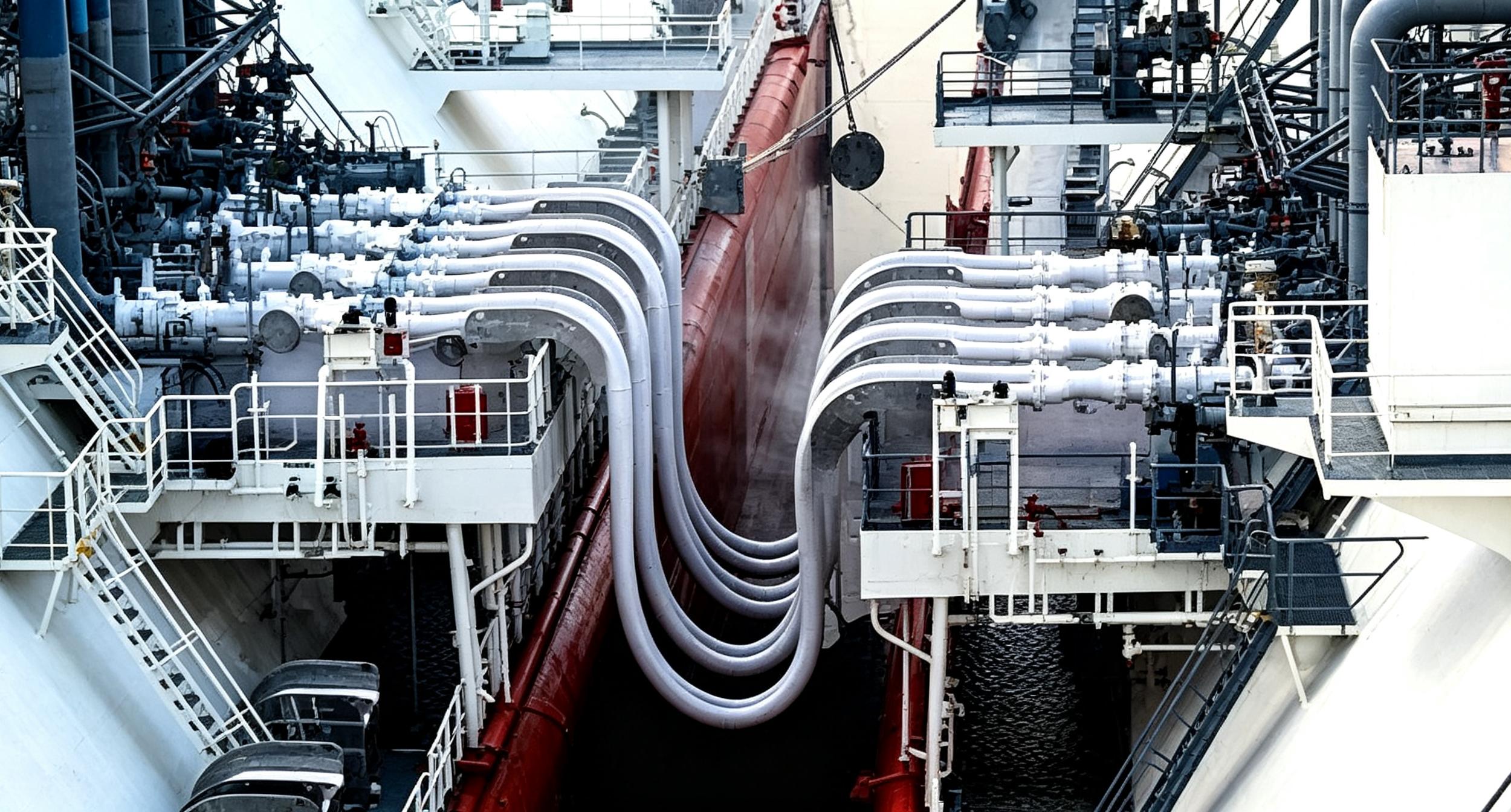
Cargo handling connects ships with the wider logistics network. A vessel may arrive at a port carrying thousands of tonnes of cargo, but the cargo must then move through several stages before reaching its next destination.
A typical cargo flow can include:
Vessel → Quayside → Handling Equipment → Storage Area → Truck/Rail → Final Destination
Poor coordination at any stage can create delays. Efficient cargo handling operations help reduce vessel waiting time, improve terminal capacity, and support shorter turnaround times.
This is especially important at modern logistics hubs, where large volumes of cargo move between sea, road, rail, and storage facilities.
Different cargo requires different handling methods. There is no single handling system that fits every vessel or terminal.
Container handling systems are designed for standardized ISO containers. They are widely used in container terminals and intermodal logistics hubs.
Common equipment includes:
These systems coordinate container movement between ships, yards, trucks, and rail terminals.
Dockside gantry cranes, also called ship-to-shore cranes, transfer containers between vessels and the quay.
They normally include:
The crane moves a container vertically from the vessel and horizontally toward the quay. The process is then reversed when containers are loaded onto the ship.
Crane capacity, outreach, lifting height, trolley speed, and vessel dimensions must be considered during system design.
Straddle carriers are mobile machines that lift and transport containers within a terminal.
The container is suspended between the carrier's legs. This allows the machine to move containers without requiring a separate trailer for every transfer.
Straddle carriers are useful where:
Some modern terminals also use automated straddle carriers to reduce the need for manual operation.
Reach stackers are flexible container-handling machines equipped with a telescopic boom.
They can lift and move containers over short distances and can often place containers in several rows or positions.
Reach stackers are often used at smaller ports, inland terminals, warehouses, and logistics yards where full-scale container cranes may not be practical.
Their flexibility makes them suitable for mixed cargo operations and changing yard layouts.
Bulk cargo requires different equipment from containerized cargo because the material is usually loose rather than packaged.
Examples include:
Typical bulk cargo equipment includes:
The handling system must control material flow while limiting dust, spillage, contamination, and product loss.
General cargo can include machinery, steel products, timber, vehicles, industrial equipment, and other non-standard loads.
Specialized cargo often needs custom lifting and transport equipment because its dimensions, weight, or shape may fall outside standard container specifications.
Project cargo may require:
The handling method must match the cargo's center of gravity, lifting points, dimensions, weight, and packaging.
A modern handling system is more than a crane or vehicle. Multiple components work together to create a complete cargo flow.
Lifting equipment provides the force needed to raise cargo.
Examples include:
The selection depends on cargo weight, lifting height, working radius, duty cycle, and environmental conditions.
Conveyors are commonly used for continuous material movement.
They are particularly useful for bulk cargo and can connect:
Ship → Unloading Point → Conveyor → Storage → Loading System
Common designs include belt conveyors, screw conveyors, roller conveyors, and bucket conveyors.
Hydraulic systems provide controlled lifting and movement for many heavy-duty machines.
Mechanical systems may include:
Proper sizing helps equipment handle repeated loading cycles and heavy loads.
Modern advanced cargo handling equipment relies heavily on electrical and digital control systems.
These systems can monitor:
Remote operation and automated control can also reduce operator exposure to hazardous working areas.
Cargo handling equipment operates around people, vessels, vehicles, and heavy machinery. Safety systems therefore need to be integrated into the equipment design.
Common features include:
A typical handling cycle involves several connected stages.
Before cargo operations begin, the terminal reviews the vessel's cargo plan, berth conditions, equipment requirements, and loading sequence.
Weather, wind, sea conditions, cargo weight, and vessel stability may also affect the operation.
Cargo is removed from the vessel using the appropriate equipment.
Containers may be handled by dockside gantry cranes. Bulk materials may use grabs, unloaders, or conveyors. Heavy project cargo may require mobile cranes or specialized lifting equipment.
After unloading, cargo is transferred to a storage or staging area.
Depending on the terminal, this may involve:
Cargo may remain in the terminal for hours, days, or longer periods.
The handling system must allow operators to locate, retrieve, and reposition cargo efficiently.
Digital terminal management systems can help coordinate equipment and cargo locations.
The final terminal stage often involves transferring cargo to trucks or trains.
Good coordination between marine and land-side equipment helps prevent congestion and improves the overall flow of maritime logistics.
Equipment selection should begin with the cargo and operating environment rather than the machine itself.
Important factors include:
| Factor | What to Consider |
|---|---|
| Cargo type | Container, bulk cargo, general cargo, liquid or specialized cargo |
| Load capacity | Maximum and typical cargo weight |
| Dimensions | Cargo length, width, height and shape |
| Handling rate | Required tonnes or containers per hour |
| Vessel type | Container ship, bulk carrier, Ro-Ro, tanker or other vessel |
| Terminal layout | Quay, yard, warehouse, storage and transport routes |
| Weather | Wind, rain, temperature and marine exposure |
| Automation | Manual, remote-controlled or automated operation |
| Safety | Load control, access, collision prevention and emergency systems |
| Maintenance | Inspection access, spare parts and service requirements |
| Future demand | Expected cargo growth and changes in trade patterns |
The equipment should also fit the operational requirements of the terminal. A large crane is not automatically the best solution if the quay, yard, power supply, or cargo volume cannot support it.
Traditional cargo operations may depend heavily on operators and manual handling. This can work for smaller operations, but labor requirements can increase as cargo volumes grow.
Modern terminals increasingly use advanced cargo handling technologies such as:
These technologies can improve consistency and reduce unnecessary equipment movements.
However, automation should be selected based on actual operational needs. A fully automated terminal is not always the most cost-effective option for a small port.
Turnaround time is the period required for a vessel to complete its port call and leave the berth.
Efficient cargo handling can reduce this time through:
For high-volume ports, even small improvements in each handling cycle can create significant gains over thousands of cargo movements.
Marine cargo handling systems are used across many sectors.
Container terminals use cranes, straddle carriers, reach stackers, automated stacking systems, and terminal vehicles to manage high cargo volumes.
Bulk terminals use conveyors, hoppers, grabs, loaders, and unloaders for continuous material movement.
Offshore facilities need reliable systems for moving equipment, supplies, pipes, containers, and other marine cargo between vessels and offshore platforms.
Shipyards use cranes, transporters, lifting systems, and storage equipment to move steel sections, machinery, engines, and assembled modules.
Ro-Ro terminals handle vehicles and wheeled cargo through ramps, trailers, tractors, and specialized loading systems.
Ports handling large industrial equipment may use heavy-lift cranes, transporters, lifting frames, and customized handling equipment.
Not all cargo can be handled using standard equipment.
Specialized cargo may include:
Such cargo requires careful planning before arrival. The team may need to review lifting points, cargo dimensions, center of gravity, route clearance, crane capacity, berth strength, and transport equipment.
For heavy loads, the lifting plan should be prepared around the actual cargo rather than a standard handling procedure.
A well-designed system should consider the complete cargo flow.
The layout should minimize unnecessary cargo movement.
For example:
Vessel → Quay Crane → Yard Equipment → Storage → Truck/Rail
Each transfer adds handling time and equipment demand. A well-planned layout can reduce unnecessary transfers.
Equipment capacity should match both current and expected cargo volumes.
Oversized equipment can increase investment and maintenance costs. Undersized equipment can create bottlenecks.
Marine equipment faces salt spray, humidity, wind, rain, and temperature changes.
Materials, coatings, electrical systems, bearings, cables, and enclosures should therefore be selected for the expected environment.
Handling equipment often operates for long hours and under repeated load cycles.
Maintenance planning should include:
A maintenance strategy helps prevent unexpected downtime.
The next generation of cargo handling systems is moving toward greater connectivity.
Sensors can collect information about equipment condition and cargo movement. Software can then use this information to coordinate operations.
Examples include:
These cutting edge technologies are especially useful in large logistics hubs where many machines operate at the same time.
The objective is not simply to add technology. The technology should solve a clear operational problem, such as congestion, equipment downtime, poor visibility, or inefficient cargo routing.
Ports are major connection points in global trade. As cargo volumes and supply chains become more complex, terminals need handling systems that can adapt to different cargo types and transport modes.
A modern port may need to manage:
This makes cargo handling an important part of the wider maritime logistics network.
Efficient systems help connect ships with warehouses, distribution centers, rail networks, road transport, and industrial facilities.
A practical selection process can follow these steps:
Identify cargo type, dimensions, weight, packaging, and handling sensitivity.
Estimate the required containers per hour, tonnes per hour, or cargo movements per day.
Consider vessel size, deck layout, hatch dimensions, cargo arrangement, and access conditions.
Check quay length, yard area, storage arrangement, road access, rail connections, and available utilities.
Compare cranes, straddle carriers, reach stackers, conveyors, forklifts, transporters, and other handling equipment.
Include load monitoring, emergency systems, inspections, spare parts, and operator training.
The system should allow reasonable capacity growth without requiring a complete redesign.
A marine cargo handling system is a combination of equipment, machinery, controls, and supporting infrastructure used to load, unload, transfer, and store cargo at ships, ports, terminals, and offshore facilities.
Common equipment includes dockside gantry cranes, mobile harbor cranes, straddle carriers, reach stackers, forklifts, conveyors, hoppers, grabs, terminal tractors, winches, and specialized heavy-lift equipment.
Straddle carriers are mainly used to lift and transport containers within a terminal. They are useful for moving containers between quay areas and storage yards.
A reach stacker uses a telescopic boom to lift and place containers, while a straddle carrier lifts the container between its supporting legs. Reach stackers are often valued for flexibility, while straddle carriers are well suited to dedicated container-yard operations.
Bulk cargo is commonly handled with grabs, hoppers, conveyors, ship loaders, ship unloaders, bucket elevators, and storage systems. The equipment depends on the material properties and required handling rate.
They can reduce turnaround times by increasing handling speed, improving cargo sequencing, reducing unnecessary equipment movements, minimizing downtime, and coordinating ship-side and yard-side operations.
Key factors include cargo type, cargo weight, dimensions, handling rate, vessel type, terminal layout, environmental conditions, safety requirements, maintenance needs, automation level, and future capacity.
Yes. Heavy-load operations can use mobile harbor cranes, heavy-lift cranes, hydraulic lifting systems, transporters, lifting beams, and other specialized equipment. The system must be designed around the actual load, lifting points, center of gravity, and site conditions.
Yes. Modern systems can use remote crane controls, automated vehicles, automated stacking equipment, sensors, cargo tracking, machine vision, and terminal management software. The appropriate automation level depends on cargo volume, terminal layout, investment plans, and operational requirements.
Marine cargo handling systems connect vessels with ports, storage yards, road transport, rail networks, and offshore facilities. The right combination of equipment can improve cargo flow, reduce manual handling, support efficient cargo handling operations, and shorten vessel turnaround times.
Container terminals may rely on dockside gantry cranes, straddle carriers, and reach stackers. Bulk terminals often use grabs, hoppers, and conveyors. Heavy and specialized cargo may require customized lifting and transport solutions.
As maritime logistics continues to evolve, cargo handling systems are also becoming more connected and automated. The best solution is not simply the most advanced system. It is the system that matches the cargo, vessel, terminal, safety requirements, operating environment, and long-term business needs.
For ports and marine operators, a clear understanding of cargo flow and equipment requirements is the starting point for building a reliable and efficient handling system.